Symbolic language and astrology

Astrology is one of humanity’s earliest attempts to find an order hidden behind the apparent chaos of the world. The human race learned to connect the events of life with the ordered patterns of the cycles in the heavens, and in this way astrology became a symbolic language with enough vitality to survive into our own day.
The original framework of astrology seems to correspond beautifully with many contemporary concepts in psychology. A great number of these were formulated by the psychiatrist and founder of analytical psychology, Professor Carl Gustav Jung. Thanks to his work on symbols, much of the content of astrology now has a modernised and enriched interpretation.
Archetypes and the collective unconscious
In his anthropological work, studying various cultures around the world, Jung established that certain motifs from mythology and fairy tales recur regardless of place, religion or way of life. This makes these motifs almost universal — all the more so as they still appear today in fantasies, in dreams, in the hallucinations of feverish patients and in the delusions of the mentally ill. In this way Jung gradually gathered the material to build a general working model of the human psyche. It includes the personal conscious and the personal unconscious — complementary spheres of the psyche with opposing characteristics, which balance one another.

The conscious encompasses everything we consciously identify with, while the unconscious is characterised by a lack of control over the instincts and holds all the contents we reject as part of ourselves. Alongside these, Jung included in his model of the psyche the collective unconscious, whose contents are not specific to the individual self and do not arise from individual experience, but derive from inherited structures of the brain and from the potential for psychic functioning as such. It is built up from the sum of all kinds of psychic reaction and all kinds of human experience since the very beginning of humanity.
The assumption that naturally follows here is that
we are all part of one whole and share an unconscious mind with everyone else.
It is in the collective unconscious that the source of these universal motifs lies — what Jung called archetypes. They are essentially the same the world over, and at the same time play an important part in the individual psyche of each person.
Just as we inherit our physical characteristics from our parents and forebears, so we inherit the archetypes residing in the collective unconscious, which we share with the rest of humanity.
The structure of an archetype
According to Jung, an archetype is a formal element, empty in itself, which offers a possible form in which content may appear. Archetypes cannot be present until they manifest in a particular form. That is, they remain in the darkness of the unconscious until they are expressed through concrete images in our psyche, and are thereby “filled” with content.
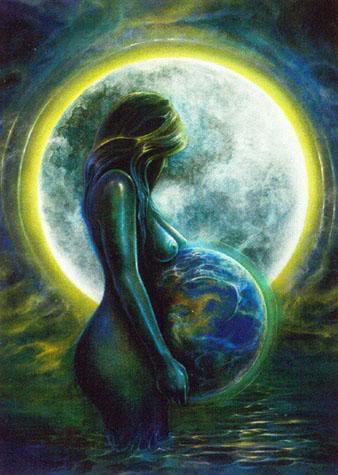
It is important to distinguish between the archetype itself and the archetypal image. The mother archetype, for example, which is part of the collective unconscious of every person, can manifest in an entirely unique way in each of us. Some of the core contents of the mother archetype are the ideas of motherhood, of nourishing, of care and protection, of growth and of giving definite form. Any object or idea that awakens a feeling of safety in a person can be seen as a symbol of the mother archetype. She is linked with the sense of shelter and safety in everything that can enclose us, like the womb that surrounds, protects and nourishes the embryo.
Every archetype can be reduced to a unit containing two fundamental opposites — light and dark, masculine and feminine, above and below, and so on. As for the mother, she can be polarised into she who gives life and she who takes life away (as an example, the suffocating and controlling “care” of a mother who does not allow her children to grow up and become independent individuals).
Archetypes in astrology
The whole astrological world of ideas can be read as a meaningful arrangement of symbols which, in turn, rest on an archetypal foundation. Because the archetypes share a common origin in the collective unconscious, the signs of the zodiac, the planets, the houses and so on can be found in the psyche of every person. They are archetypes that suggest particular forms, representative of the psychic material and processes people have learned to meet and handle over centuries.
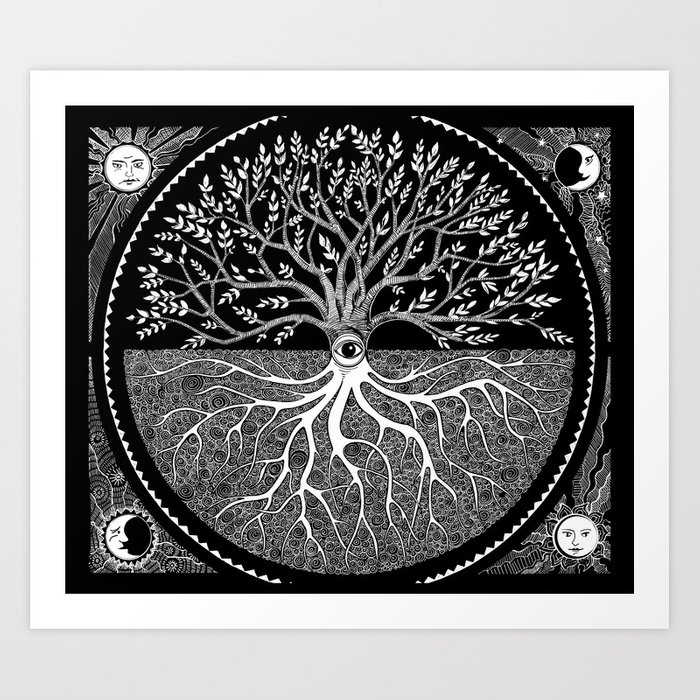
Even so, whether something is perceived as a symbol or not depends entirely on the conduct of the observer’s conscious mind. The variety of symbols is vast, and most of them have the potential to be seen as objects we meet in everyday life. A tree, for instance, can be regarded as a purely natural phenomenon — in which case it is not a symbol — or as a symbol for human life.
In addition to symbols taken from everyday life, there are those with no direct connection to sensory experience. They are rather images that hold symbolic power in themselves. A very good example is the eye set against the background of a triangle. Since such compositions are not drawn from objective reality, they ought to be considered through their symbolic nature, which requires the mind to work with symbolic language. In this way the perception of a symbol depends on whether it is still alive in people’s minds, or has long fallen out of use and is therefore dead.
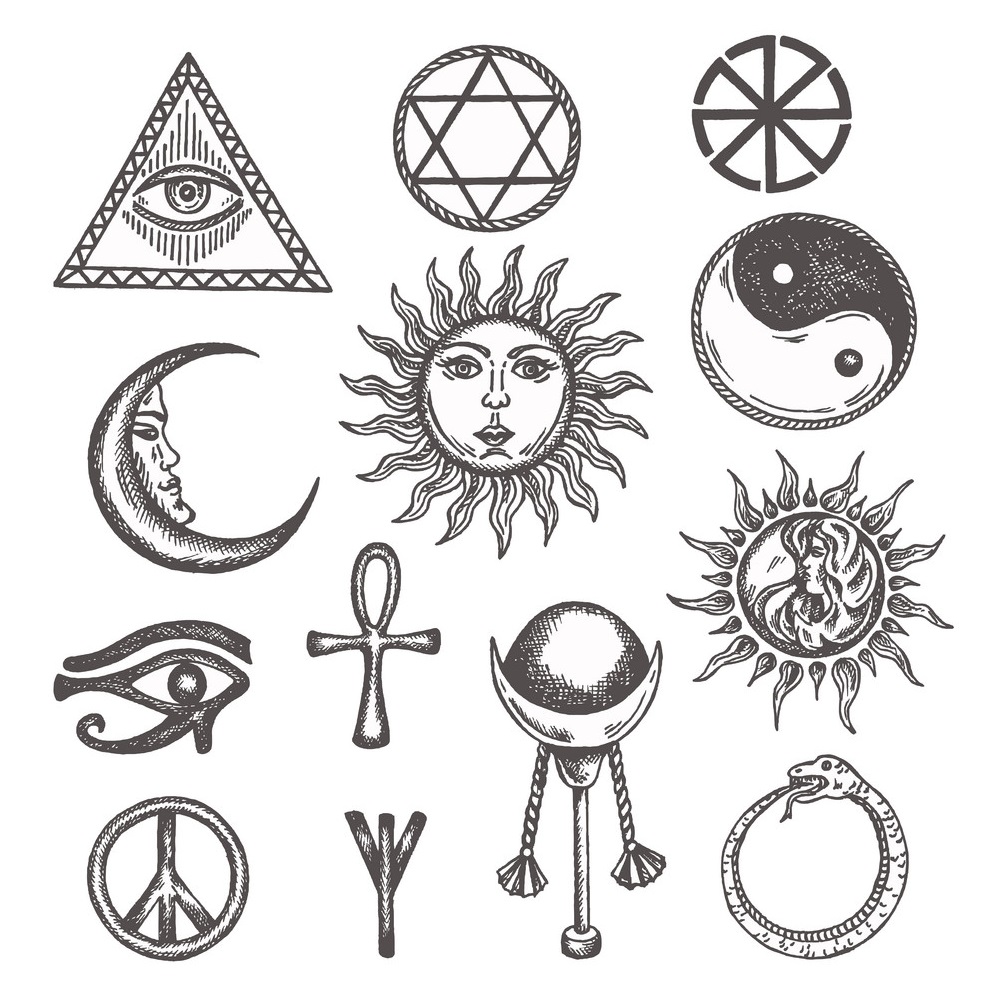
This is why there will always be people who, because of their symbolic frame of mind, can enter deeply into the content of a symbol. And there will be others who, for want of understanding of this hidden world of meanings, will not reach the deep knowledge lying beneath the surface of an “ordinary” image. For them, phenomena conceal nothing and remain as they appear in the tangible world of the senses.
Accepting and “believing in” astrology depends entirely on whether a person’s conscious mind is built upon a symbolic view of things or an entirely sensory and rational one. For this reason, not everyone is able to understand the symbolic language of astrology. This, of course, does not stop anyone from trusting it.
Continue with another article

Between Matter and Love: an astropsychological reading of the myth of the abduction of Persephone
Read
The polarity of human consciousness in the six astrological axes, part II
Read