On forgiveness and self-awareness

What is forgiveness? What has to happen for us to arrive at a conscious need to forgive one another?
In Christian ethics, forgiveness is a kind of act of humility and inner cleansing. The decision to forgive comes out of the need to move on.
In the particulars of everyday life, what offends us is very often words. The reason is that we would rather not identify with the qualities they describe — we consider them “bad” and unacceptable. At other times the wound comes not only through words but through actions that have left us feeling humiliated and stripped of dignity. We forgive the offence or the pain we feel when someone deals us a “blow”, whether through what they say or what they do.
It hurts most from those closest to us
If anything makes the blow more painful, it is that it comes from someone let close into our intimate world, someone who has earned our trust. Family and friends know our weaknesses, fears and wounds best; with them we are open. And when a person has so few defences towards someone, it means they do not expect to be hurt by them.
And what are human relationships at all without trust?
An exchange between the dominant and the dominated, in which there is no equality or mutual respect, and where fear reigns instead. In such an interaction the dominant one fears losing control over the other and, above all — unconsciously — over themselves. In such a person lives the fear of falling apart, of losing their personality entirely in contact with the outer world and with other people. And so they prefer to control everything and everyone. Such a person needs to begin “controlling” themselves — to build their own inner ground and sense of worth, in order to meet the deeply rooted feeling of inadequacy, weakness and guilt within.
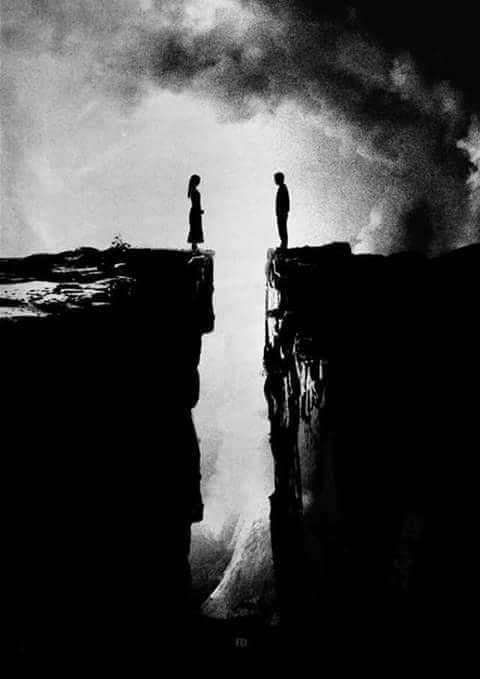
In relationships of relative equality and mutual trust, an offence causes pain in proportion to how deeply the one who caused it has been let into our inner world. If we think of a relationship as a channel through which energy flows both ways between two people, an offence is like a knot that keeps the energy from moving freely. Sometimes it is only a small knot, but however much we pretend it is not there, it is — and it draws on the energy of both. In time, whatever the apparently good intentions of those involved, it becomes a knot of negative energy: a kind of black hole that swallows every attempt at tenderness, trust and love. And so it goes, until both grow tired of pouring positive energy into the relationship, because it keeps disappearing somewhere.
Activating forgiveness
Forgiveness cannot work with its full healing power in a particular relationship until the injured person accepts the other’s momentary weakness. It comes into its full potential when the one who was hurt decides to move forward in the clear knowledge that the person beside them matters more than the pain that was caused.
It seems all too “human” to hurt another human being when we feel unsteady and weak.
So why is it so hard to forgive, or to ask for forgiveness?
One reason a person withholds forgiveness comes from not wanting the other to feel better. Refusing to give or accept forgiveness is a form of punishment for the person opposite — a way of exercising control over the situation, compensating for the control that was lost.
Have we been hurt and humiliated too much and for too long? Do we feel the other can no longer give us anything good? And above all, do we sense that we can no longer trust them?
To forgive another, we first need to forgive ourselves — for letting someone too close, for allowing them to hurt us with their words and actions, because we did not set healthy boundaries.
Perhaps we do not know our own wounds and fears well enough — the ones simply waiting to be “touched” in order to ache. And the more we close our eyes to these weak places of ours, the more painfully we feel them when someone sets them off with an offence.

A meditation on forgiveness
Let us imagine we are entirely alone at night, in a dark and dense forest. Our pupils are wide open in the impenetrable dark, we hear only the swaying of the branches and feel the wind cool against the skin. We shiver.
What thoughts pass through our mind? What would frighten us?
The thought of an approaching beast that will tear us apart, or the chilling feeling that we are utterly alone and defenceless? Whatever situation we find ourselves in, the appearance of such strong and extreme emotions about how things will turn out is nothing more than a reflection of our own fears — and of our dreams and longings too.
Every one of the thoughts that passes comes from fantasy and therefore from our own unconscious psyche. The less we know this part of ourselves, the more threatening those thoughts in the dark will seem. There is nothing more frightening than what lies within us, deep in the impenetrable dark of the most hidden parts of our own psyche. Jung called this our shadow. It is there that both the worst and the best of us reside, waiting only to be lit by the light of consciousness so that they may have a chance of joining the whole of who we are.
It is extremely difficult for a person to accept their own psychic shadow.
The thought that we contain sides we do not approve of, and even despise, appals us. And the larger this unknown and rejected part of a person is, the harder it becomes for them to give or receive someone’s forgiveness consciously and sincerely. Forgiveness is not given in order to erase the memory of an offence; its true power lies in being able to change the future that would otherwise follow without it.