Synchronicity: the idea of free choice

The law of cause and effect underpins modern science, which relies almost entirely on causal thinking to prove the theories it develops. As a mode of thought, it treats the world and everything happening in it as a collection of “simple events” bearing no relation to the other processes unfolding alongside them. It also excludes the idea of a universal interconnectedness between separate events.
How the notion of “synchronicity” developed in the Western world
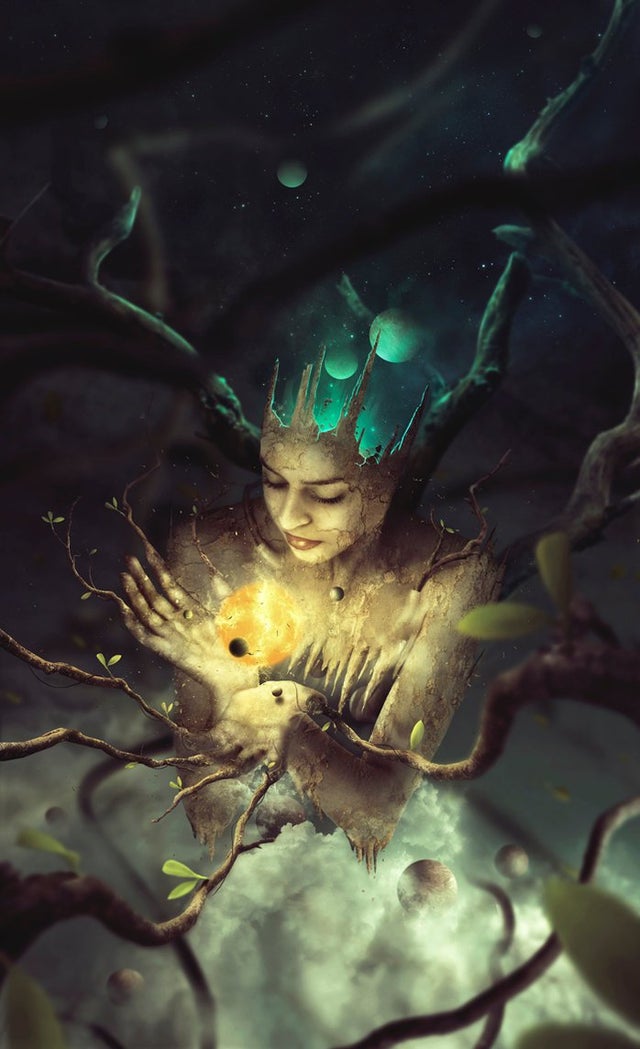
According to the analytical psychologist C. G. Jung, “this has an increasingly unfavourable effect on our acquiring knowledge of large-scale relationships and of the unity of the whole, since everything that happens, happens in one and the same world and belongs to it. On this basis rests the claim that all events must possess the aspect of unity.” The hermetic Principle of Correspondence says as much: “as above, so below; as below, so above.” This principle is one of the pillars on which astrology as a discipline is built, and in the modern world it offers a way of looking at situations that could not be explained within the principle of causality.
In brief, causal thinking looks at a sequence of events A, B, C, D and so on, where each appears as a result of the one before. Here the cause precedes the effect, and time therefore has the linear structure of “before” and “after”. On the other hand, a growing body of research in physics shows that the effect sometimes precedes the cause, and that at the microphysical level this principle does not hold universally. This in turn means that it is not an absolute law but rather a tendency, or a probability. Following his own in-depth research in the early twentieth century, Jung introduced the term “synchronicity” to describe events coinciding in time that have no causal relation to one another, and which are therefore usually described as “meaningful coincidences”.
Which came first — the egg or the chicken?
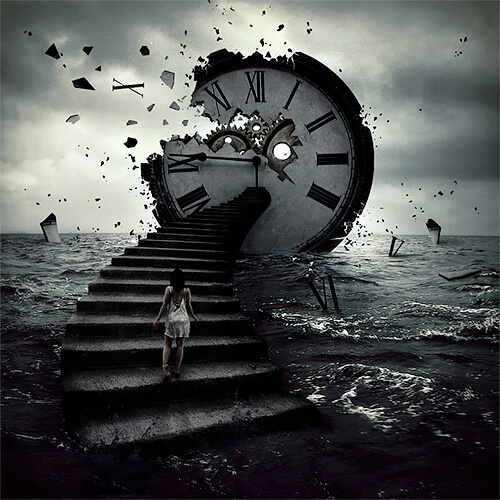
The classical mode of thought in China is synchronistic, or so-called thinking in fields, which take in a group of probable events gathering around a common centre, much like a mandala. In Chinese civilisation the question is not how or why something came about, but what things tend to happen at the same time. Western causal thinking, by contrast, separates psychic from material events, and generally expects physical events to cause another physical event or a psychological one — “I had a hard day at work, so my head aches now and I do not feel like going anywhere.”
Only in the twentieth century did the interaction between the two lines begin to be observed in the reverse order: the possibility that psychic activity might bring about a physical phenomenon. In this way the “happening” of things can be seen as an energetic phenomenon flowing freely in both directions — between the physical and the psychological dimension. This is the subject of the increasingly popular field of psychosomatic medicine.
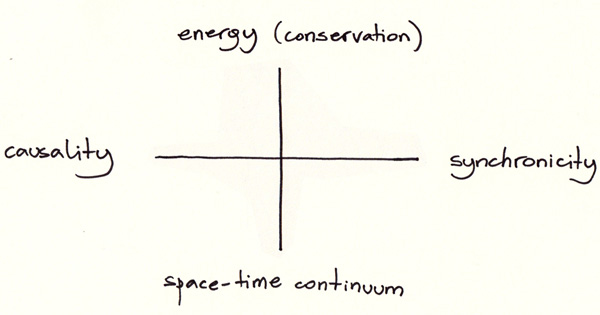
In the synchronistic Asian mode of thought, it matters to observe both lines, or fields, of reality — and how at certain moments, when someone thinks or dreams a particular thing, that is, when a psychological event occurs, certain physical events take place. This shows that the element of time is very important for synchronistic thinking, because it is the unifying factor that focuses observation on a complex of events around a single centre.
A contemporary understanding of synchronicity
For many people the notion of “synchronicity” carries the sense of certain events happening at the same time. Jung stressed that this coincidence is relative, noting that it can only be understood through individual, subjective perception. We might add one further dimension of meaning to the notion — the sense of significance in the connection between the separate events.
In other words, forming spontaneous associations between happenings and encounters in conscious life and the images of dreams and fantasies arising from the unconscious psyche is central to perceiving synchronicities that can be read as signs. A sign might be a person who resembles someone from the past, an animal that appears during a walk, or a song that stirs a particular feeling. We can speak of synchronicity when there is more than one sign that we connect with the same meaning.
In his essay “Synchronicity: An Acausal Connecting Principle”, Jung treats the phenomenon of synchronicity as arising from the collective unconscious and from the archetypes, or universal symbols, on which it is built (more on this in Symbolic language and astrology). In his view, this collective, unconscious mind, which we all share, holds within it active and theoretical knowledge, as well as everything that has ever happened and everything that will happen. Synchronicity thus describes the governing dynamic underlying all human experience — social, emotional, psychological and spiritual — and at the same time accounts for the order between the micro and the macro cosmos.
It is precisely this connection that the principle “as above, so below; as below, so above” addresses. Those whose conscious mind works with symbolic thinking and studies the great events in the heavens hold the key to the astrological method of “reading” the small events on Earth. In itself, this points to a governing principle or transcendent unity, known as God, which is revered in every religion in the world, whatever its name. This transcendent being is beyond our notions of time and space, and at the same time beyond the human capacity to be understood in depth. As Jung puts it, “this background of the universe as a whole belongs to both the physical and the mental sphere, and for that reason to neither of them, but rather forms a third thing, neutral in character, of which a person can have only the faintest notion, since in itself it is transcendent.”
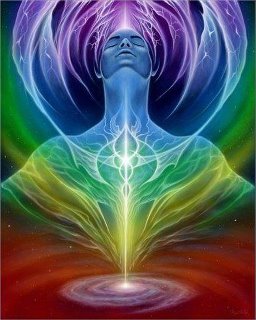
Reading the signs in life brings what is called intuition, or clear seeing. Practising it helps a person realise that the cause of everything they draw into their life — people, messages, events — is themselves, and that taking responsibility is the only way to be able to make free choices. This is the path by which a person begins to create their own future, through the choices they make in the present.
For more on signs as an instrument, and on ways of reading them, see here.
If you have particular questions about an experience of your own — events, encounters or dreams — and would like help in reading and interpreting it, do not hesitate to get in touch on the phone number and email given on the site.
Continue with another article

Between Matter and Love: an astropsychological reading of the myth of the abduction of Persephone
Read
The polarity of human consciousness in the six astrological axes, part II
Read