The path of self-knowledge

How does human consciousness work?
The unity of life around us reveals itself through an endless variety of forms. What these forms share is the all-pervading impulse towards life, which can be observed in the wild as an unceasing struggle to survive. Just as the conditions of life change naturally over time, so living forms adapt to the environment they inhabit. This change in forms allows a person to register the differences between them, to compare them, and to give them meaning and value.
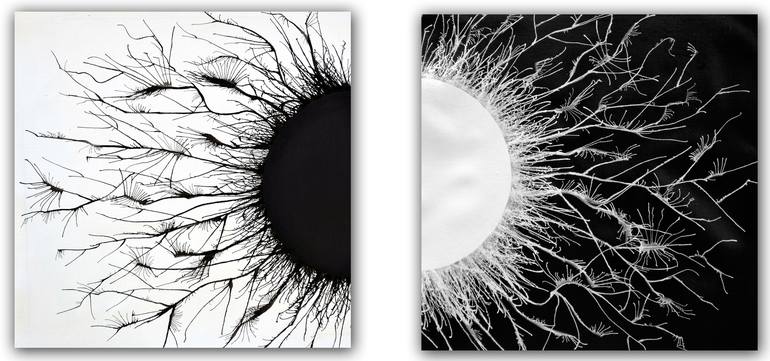
Applying this principle: when a person is ill, they can no longer take health for granted, and learn to give it greater meaning and to value it. Looking at both sides of the same question leads to understanding and perceiving it more deeply. Even so, an apparent contrast such as illness and health in fact forms a single unit, containing two opposing expressions of one and the same ground — in this case a person’s physical condition. In other words,
the human mind and consciousness perceive by way of the opposite (the antithesis)
of every thing. Human consciousness cannot perceive good, for instance, without the presence of evil, or light without the existence of shadow. Both principles are equally necessary, since we could not perceive one without the other — and this creates the illusion of duality in life.
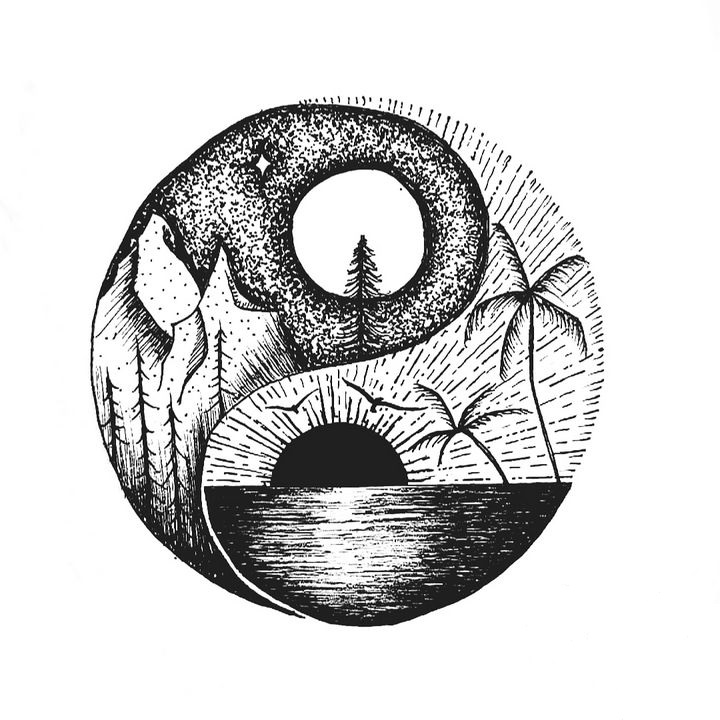
As far back as ancient China, people knew of the opposites Yin and Yang, which together make up the sum of all life. The Western world borrowed the same idea and applied it to the opposites of masculine and feminine, active and passive, giving and receiving, and so on. Positioning themselves in relation to these two-poled divisions, a person learns to see themselves as a separate unit within the variety of forms contained in the unity we call life.
How is human consciousness formed?
If we accept that the universe is a single whole, then human consciousness, inhabiting a particular body, has material outlines and boundaries that at first glance separate it from that whole. When a baby is born it perceives its mother as an extension of itself, and it takes around six months before it begins to sense that its body is separate from hers, and that its wishes are not her wishes. Gaining a sense of its own body, a person separates themselves from the Whole and becomes an I — and everyone apart from them, an Other.
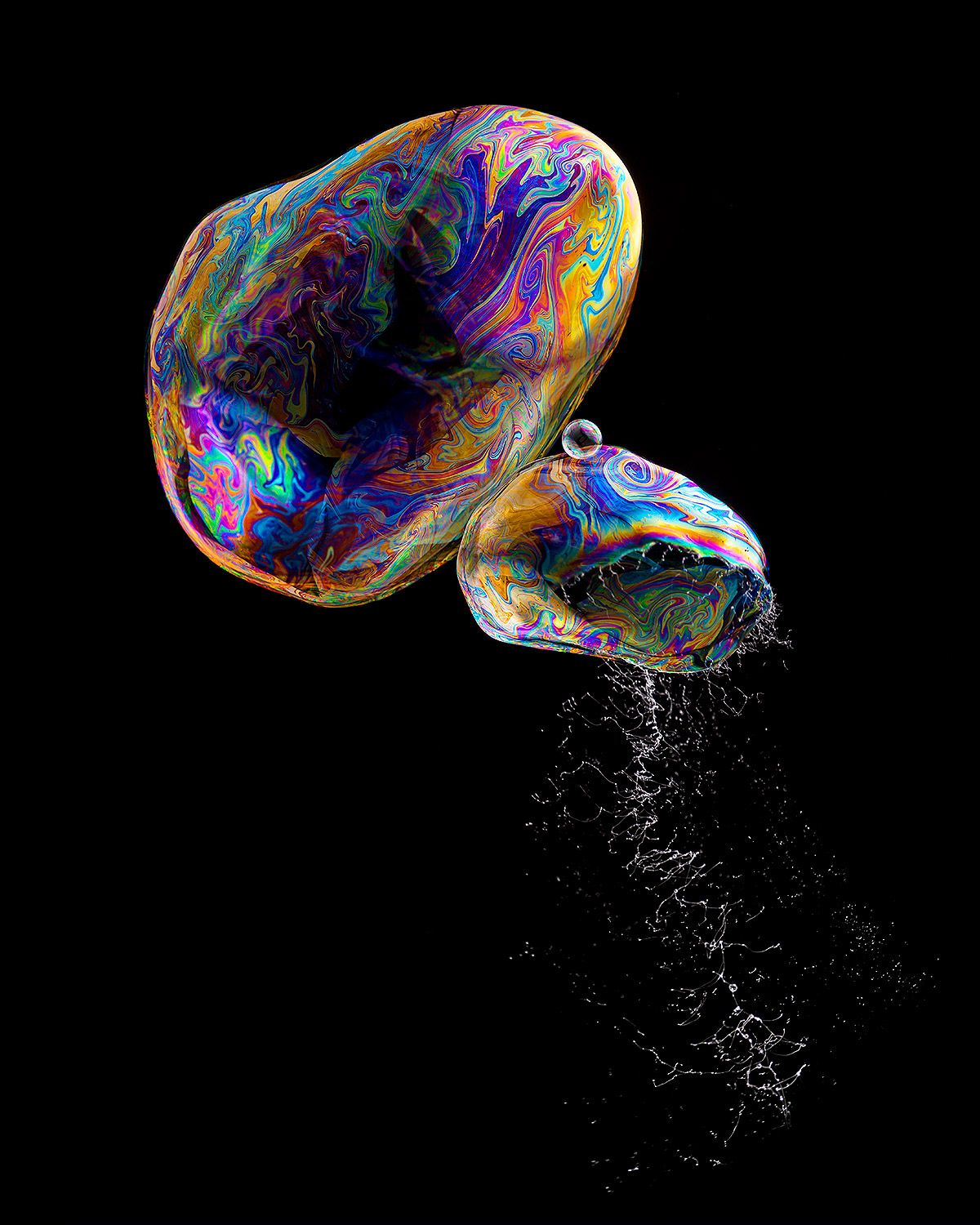
Having come to know the world through the developing senses of the body, children move to the next stage in forming a separate mind and consciousness, through the use of language as a means of expression. At first, language serves to communicate a child’s basic needs, such as food — needs that were met instantly while in the mother’s womb. The ability to put things into words is directly linked to the ability to think, a well-known fact from developmental psychology. When we use language, our consciousness perceives by defining, or giving form to, mental constructs, breaking reality into ever smaller pieces.
In this way human consciousness gradually begins to distinguish between the separate pieces, dividing them into opposing pairs. Without sensory and mental perception, differences between states cannot be registered — and without those, human consciousness cannot exist.
A struggle between opposites, or a chance at wholeness?
It is said that “opposites are mutually exclusive”, meaning that if you say yes to one and recognise yourself in it, you automatically say no to its opposite and do not wish to be associated with it. This happens because human consciousness cannot perceive itself as two apparently opposing things — good and bad, for example — and instead strives in every way to accept one pole as its own expression and to see the opposite pole outside itself. The psychological term that describes this phenomenon most fully is projection.
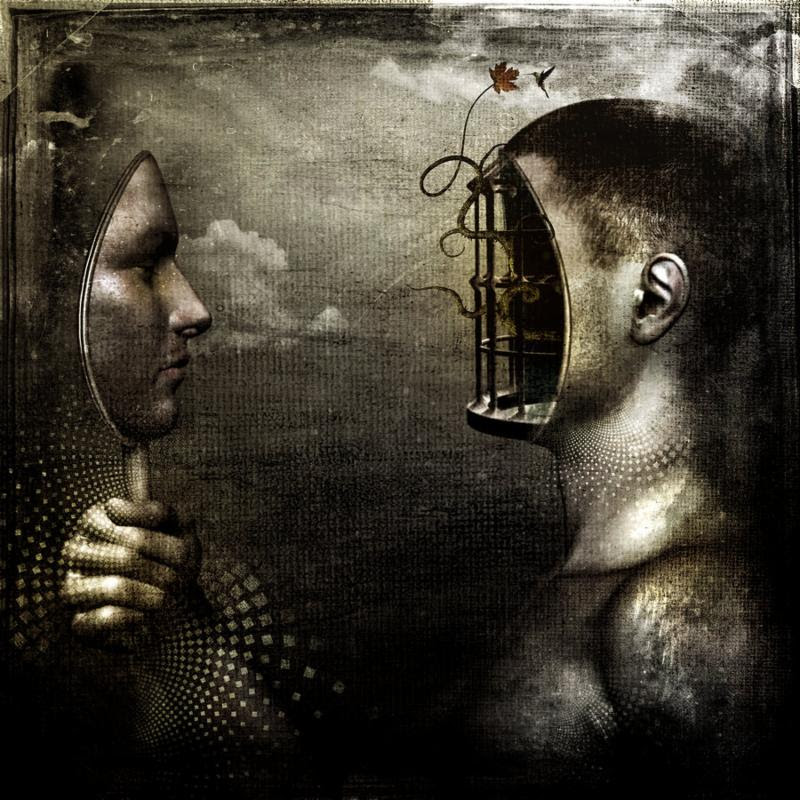
If a person has a relatively positive self-image, for instance, they may consciously see themselves as good, purposeful, generous, cheerful and welcoming. The more they identify with these qualities of theirs, the more clearly they will meet and attract people in whom they notice the opposite qualities — bad, chaotic, tight-fisted, gloomy and ill-mannered. Human consciousness tends to notice most clearly the qualities it is connected with, consciously or unconsciously. The more strongly we are irritated by someone, or admire them, the greater the degree to which we possess the potential for everything we see in them.
Here lies the answer to the question of what our psychic shadow is, and
what actually stands behind psychological projections.
More precisely, their purpose is to relieve consciousness of the inner tension created on contact with contents it does not wish to be associated with — most often because it regards them as unacceptable, unpleasant, even ugly. At the same time, projections serve to help us come to know these very parts that are in shadow for our consciousness, and in the end to become more whole and more conscious of ourselves and of the world, which we perceive as our reflection.
In short, everything we see outside is part of ourselves, and the stronger our emotional reaction to it, the more unconscious it is — because we consciously associate ourselves with its opposite. A person’s ability to perceive themselves and life in their wholeness gives them the freedom to choose their own reality. When a person accepts that they can be good and at the same time bad, generous and at the same time tight-fisted, and so on, they are in fact choosing to be themselves — to be their authentic self.

The ultimate aim of the path of self-knowledge
What makes us good or bad is not some constant, or a stamp we were born with. It lies in the ability to choose for ourselves who to be and how to treat others, regardless of the family and social patterns we have taken on as our own over time. The path of self-knowledge and inner development is hard, because winning the freedom to create your own life requires accepting and coming to love the darkest and ugliest parts of yourself. In this way the experience of individual human consciousness passes through the forming of a separate I, in order to return afterwards to the Whole from which it came — where there are no opposites, but Unity. This path, shaped by the duality of human perception, is the ground on which the order of the astrological signs is built.
You can read more about the polarity of human consciousness, seen through the lens of astrology, here.
If you would like support on your own path of self-knowledge, do not hesitate to get in touch.
Continue with another article

Between Matter and Love: an astropsychological reading of the myth of the abduction of Persephone
Read
The polarity of human consciousness in the six astrological axes, part II
Read